
Swiss German vs. Standard German: More Than Just an Accent
If you've ever walked into a bakery in Zurich after years of learning German in school, you might have been met with a confusing realization: I don't understand a word they're saying.
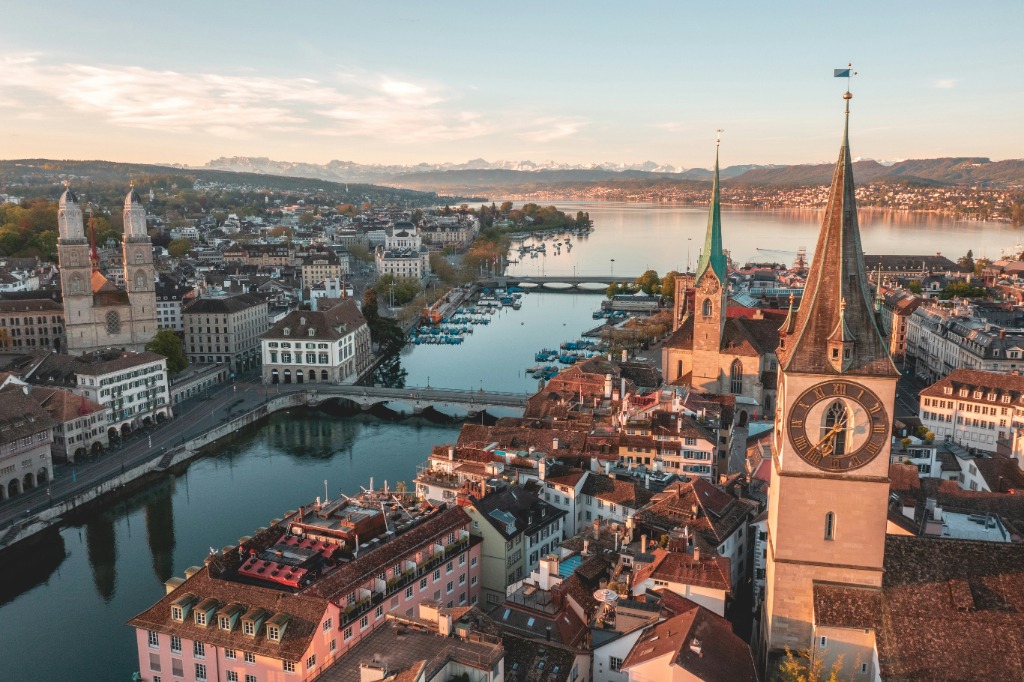
Zurich, Switzerland — Photo via Unsplash
To the untrained ear, Swiss German can sound like a completely different language. While Swiss German (Schwiizerdütsch or Mundart) and German (Hochdeutsch) share of course common history, they function as two distinct linguistic worlds in Switzerland. Understanding these differences is the first step toward navigating the diverse cultural landscape of the country.
The "Diglossia" Phenomenon: A Tale of Two Languages
The most fundamental difference is how the languages are used in daily life. Switzerland operates under a system called Diglossia, where two different varieties of a language are used by the same community under different conditions.
- Swiss Standard German (Schweizer Hochdeutsch): This is the formal, written standard. While it is very similar to the German spoken in Germany, it contains unique Swiss vocabulary and spelling. It is used in newspapers, books, formal laws and schools.
- Swiss German (Schweizerdeutsch): This is a collection of Alemannic dialects used for almost all daily spoken communication. From the boardroom to the dinner table and from radio broadcasts to casual street encounters, the Swiss speak dialect.
1. Phonology
The most immediate difference is the sound. Swiss German is famous for its "ch" sound—a harsh, velar fricative produced deep in the throat (think of the famous word Chuchichäschtli, meaning "little kitchen cupboard").
Unlike Standard German, which underwent various vowel shifts over the centuries, Swiss German has retained many Middle High German sounds. Diphthongs (double sounds) in Standard German often become long monophthongs in Swiss German. For example, the German word for house, Haus, becomes Huus in most Swiss dialects, and Eis (ice) becomes Is.
2. Vocabulary and "Helvetisms"
Swiss German has been heavily influenced by its neighbors, particularly France and Italy. These unique Swiss-German words and expressions are known as Helvetisms. Even when writing in "Standard German," a Swiss person will use these specific terms that a speaker from Berlin or Hamburg might not recognize.
- Standard German: Fahrrad (Bicycle) / Swiss German: Velo
- Standard German: Fahrkarte (Ticket) / Swiss German: Billett
- Standard German: Dankeschön (Thank you) / Swiss German: Merci
- Standard German: Brötchen (Bread roll) / Swiss German: Mutschli or Weggli
3. Grammar: Simplifying the Complex
Swiss German grammar is actually simpler than Standard German in some ways but it follows its own very strict internal logic:
- No Genitive Case: Swiss German has completely dropped the genitive case (des Mannes), replacing it with dative constructions (em Maa sis—literally "to the man his").
- No "Präteritum" (Simple Past): In Swiss German, there is no simple past. Everything is expressed in the perfect tense. Instead of saying "I went" (Ich ging), a Swiss person will always say "I have gone" (Ich bi gange).
- The Missing "ß": In the written form, the "eszett" (ß) does not exist in Switzerland. It was phased out in the 20th century and is always replaced by "ss". While small, this is the quickest way to spot a text written specifically for a Swiss audience.
- Diminutives: The Swiss love to make things smaller. While Germans use -chen (e.g., Hündchen), the Swiss use the iconic -li (e.g., Hündli).
4. No Standardized Spelling
Perhaps the greatest difference is that Swiss German has no official spelling rules. Because it is primarily a spoken medium, there is no "correct" way to write in dialect. When people text friends or write informal emails, they write phonetically based on their specific regional dialect—whether it's Züritüütsch from Zurich or Bärndütsch from Bern.
This means that while Schriftdeutsch (Written German) is the language of the pen, Schweizerdeutsch is the language of the heart and the voice.
In short
The difference between Swiss German and Standard German is not just a matter of "slang" or a local accent—it is a distinct linguistic structure rooted in history and identity. For anyone visiting or working in Switzerland, acknowledging this difference is the key to understanding the local culture. While Standard German will get you by, it is the melodies of the Swiss dialects that truly open the doors to Swiss life.